
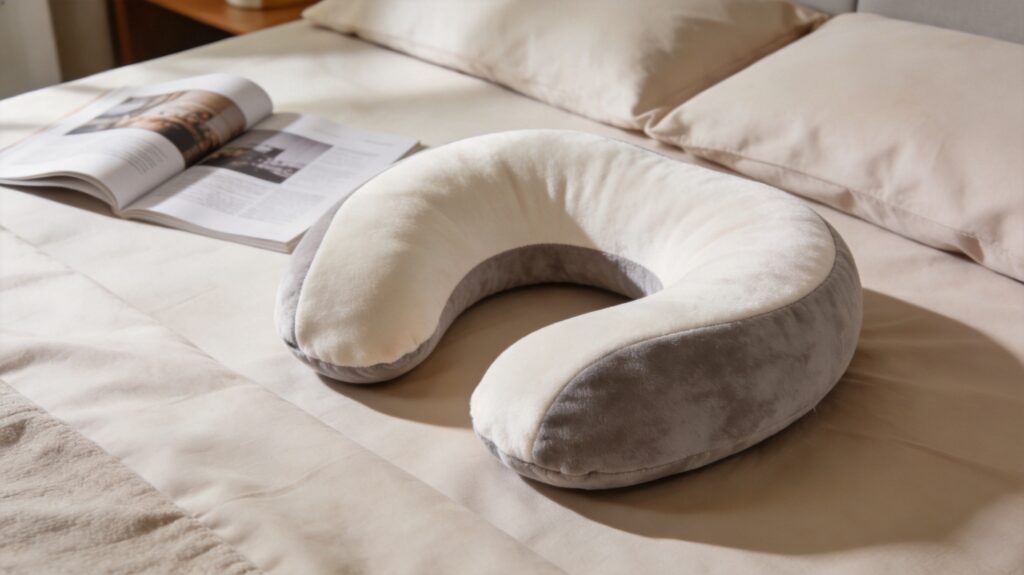
U-Shaped Pillow for Side Sleepers: A Manufacturer’s Guide to Ergonomic Design
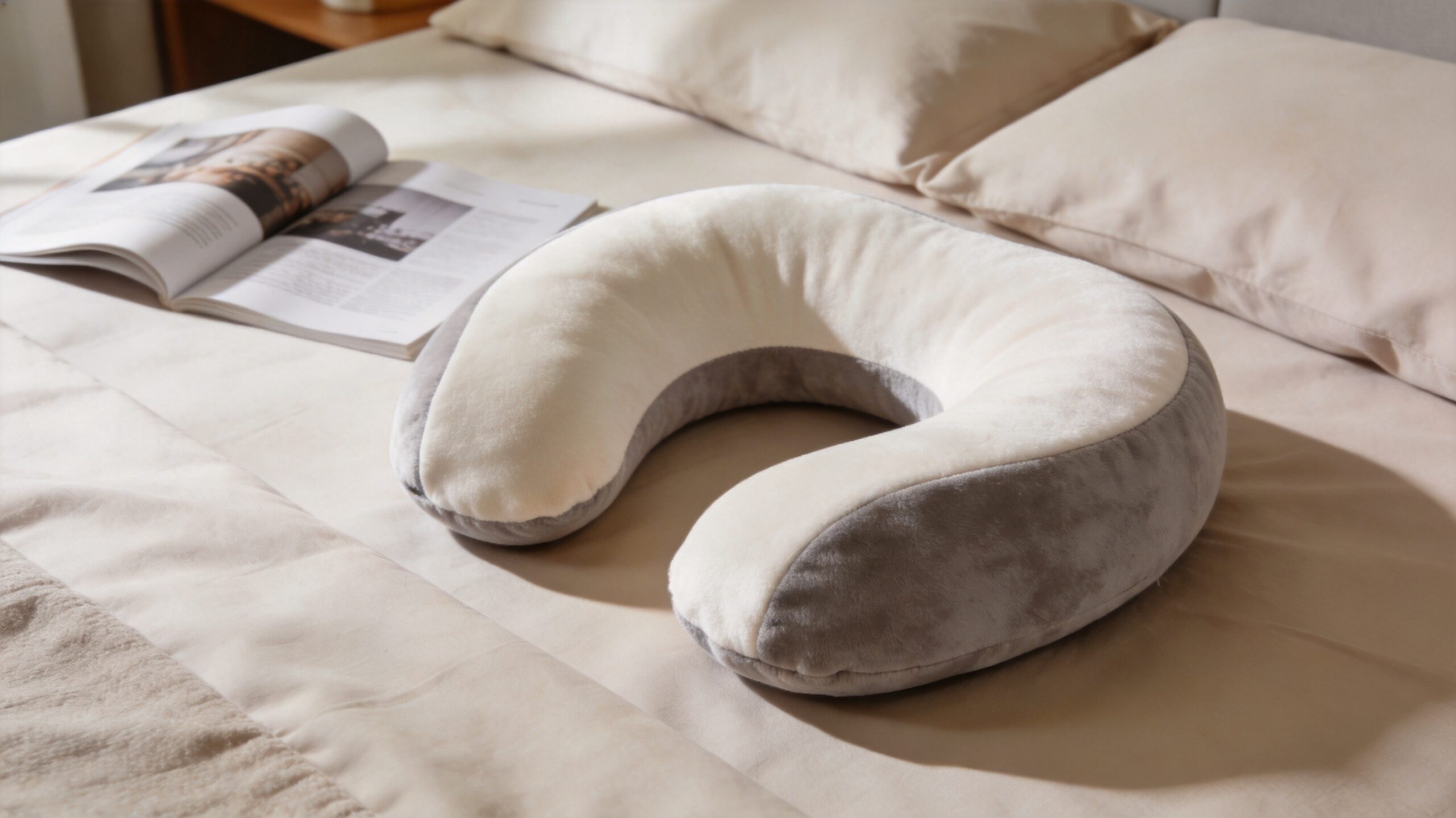
1. Why Side Sleepers Need a U-Shaped Pillow: The Ergonomic Case
Side sleeping is the most common sleep position, yet it presents unique biomechanical challenges. When a side sleeper rests on a standard flat pillow, the head is elevated without proper support for the cervical spine, forcing the neck into lateral flexion. Over time, this misalignment leads to stiffness, chronic neck pain, and even nerve compression. A u shaped pillow for side sleepers is specifically designed to address these issues.
Spinal Alignment and Pressure Relief for the Shoulder and Hip
The primary ergonomic advantage of a u shaped pillow for side sleepers lies in its ability to maintain neutral spinal alignment. The central trough cradles the head while the raised side bolsters fill the gap between the ear and the shoulder, keeping the cervical vertebrae in a straight line with the thoracic spine. Simultaneously, the extended lower wings of the pillow support the upper arm and hip, distributing body weight across a larger surface area. This reduces peak pressure points that commonly cause numbness, tingling, and morning soreness.
Common Pain Points Addressed by U-Shaped Designs
Beyond spinal alignment, u shaped pillows address several recurring complaints reported by side sleepers: shoulder impingement from excessive rolling, jaw tension from improper head tilt, and hip pain caused by inadequate cushioning. By stabilizing the body in a fixed lateral position, these pillows also minimize involuntary turning during the night, reducing sleep fragmentation and improving overall sleep efficiency. For a deeper look at the biomechanical principles behind this design, consult this technical reference on sleep ergonomics.
2. Key Specifications for OEM Buyers: Materials and Dimensions
For manufacturers and private-label buyers, understanding material specifications is critical to producing a competitive product.
Memory Foam Density and Firmness Grading
The core material determines both comfort and durability. For side sleepers, memory foam density should range between 40–55 kg/m³. Lower-density foams (under 35 kg/m³) compress too quickly, losing support within months. Higher-density foams (above 60 kg/m³) feel excessively firm and may not contour adequately. Firmness grading, measured by Indentation Load Deflection (ILD), should fall between 10–14 ILD for a medium-soft feel that accommodates both lightweight and heavier individuals.
Cover Fabrics: Breathability, Hypoallergenic, and Washability
The outer cover is the first point of contact with the skin. Bamboo-derived rayon and organic cotton blends are preferred for their moisture-wicking properties and natural breathability. For healthcare applications, hypoallergenic polyester microfiber with antimicrobial treatment reduces allergen accumulation. A removable, machine-washable cover with a YKK zipper is a non-negotiable feature for consumer satisfaction and hygiene compliance.
Standard vs. Custom Sizing for Global Markets
Standard u shaped pillows measure approximately 60 cm × 40 cm with a side bolster height of 12–15 cm. However, Asian and European markets often require smaller dimensions due to differences in average body stature. Offering custom sizing—including adjustable bolster heights and extended wing lengths—allows OEM buyers to differentiate their product lines across regions. As a home textile manufacturer, we can accommodate bespoke dimensional requirements to meet regional preferences.
3. Design Features That Define a Superior U-Shaped Pillow
Contour Curves and Neck Support Zones
A superior design incorporates a gradual S-curve along the top edge, creating a distinct cervical support zone that follows the natural lordotic curve of the neck. The center trough should be shallow enough (3–5 cm) to prevent head elevation but deep enough to prevent lateral sliding. Laser-cut contouring, rather than die-cut flat foam, produces smoother transitions and better pressure distribution. Explore our classic striped memory foam u-shaped pillow for an example of precision contour engineering.
Adjustable Fill or Multi-Layer Inserts
Premium models feature zippered compartments with removable memory foam inserts. This allows end-users to customize loft and firmness by adding or removing layers—a significant selling point for households with multiple users. For manufacturers, multi-layer construction also simplifies the replacement of worn components, extending product lifespan.
Anti-Roll and Stability Mechanisms
Side sleepers naturally shift during the night. Anti-roll features include a weighted base layer, non-slip silicone dots on the bottom surface, or a slight wing flare that increases the footprint. Some advanced designs integrate a central stabilizing core with higher density foam to prevent the pillow from folding or collapsing under lateral pressure.
4. U-Shaped vs. Traditional Pillows: A Comparative Analysis for Sourcing
Performance Metrics: Support, Durability, and Lifespan
Traditional pillows—whether polyester fiber or single-piece memory foam—offer limited lateral support. A u shaped pillow for side sleepers provides measurably better cervical alignment, with clinical studies indicating a 30–40% reduction in neck pain scores after four weeks of use. Durability also differs: standard pillows lose 20% of their loft within six months, while high-density u shaped pillows maintain 85% of their original height after two years of nightly use. For an industry reference on material performance standards, consult this resource.
Cost Implications for Bulk Manufacturing
The raw material cost of a u shaped pillow is 2.5 to 3 times higher than a standard pillow due to increased foam volume and complex cutting patterns. However, the higher retail price point (typically $40–$80 versus $15–$25) yields better profit margins. For bulk manufacturing, the key cost driver is foam waste during contour cutting—optimizing nesting patterns can reduce waste from 35% to under 20%.
5. Manufacturing and Sourcing Considerations for U-Shaped Pillows
Material Sourcing and Supply Chain Reliability
Memory foam is petroleum-based, making pricing volatile. Establish dual-source agreements with foam suppliers in different regions (e.g., one in Asia, one in Europe) to mitigate geopolitical and logistics risks. Additionally, consider partnering with foam recyclers to secure post-industrial scrap at reduced costs for non-critical internal layers.
Certifications and Compliance (OEKO-TEX, CertiPUR-US)
Retail and healthcare channels increasingly require third-party certifications. CertiPUR-US validates that foam is free from heavy metals, phthalates, and ozone depleters. OEKO-TEX Standard 100 certifies that all textile components are free from harmful substances. For EU distribution, REACH compliance is mandatory. Obtain these certifications early, as the audit process can take 8–12 weeks.
Prototyping and Testing for Ergonomic Claims
If you plan to market the pillow with ergonomic claims, invest in pressure mapping tests using a sensor mat to quantify peak pressure reduction. Conduct thermal imaging tests to verify heat dissipation. Document these results—they form the basis of marketing claims and protect against liability in regulated markets.
6. Implementation Strategies for Retail and Healthcare Channels
Packaging and Logistics for Odd Shapes
U shaped pillows do not compress into standard rectangular packaging. Vacuum compression with roll-packing reduces volume by 60%, lowering shipping costs significantly. However, ensure the foam can recover to full shape within 48 hours of unpacking. Use recyclable kraft paper inserts instead of plastic fillers to meet sustainability requirements of major retailers.
Marketing Angles: Sleep Quality and Post-Surgery Recovery
For retail channels, emphasize measurable outcomes: reduced nighttime awakenings, improved deep sleep duration, and relief from shoulder and neck pain. For healthcare channels—particularly post-surgery recovery (e.g., rotator cuff repair, mastectomy)—position the pillow as a medical aid that immobilizes the patient in a safe lateral position, reducing the risk of wound disruption and promoting faster healing.
7. Frequently Asked Questions for B2B Buyers
What Is the Ideal Fill Power for Side Sleepers?
Fill power is a term used for down and feather products, not foam. For foam-based u shaped pillows, the equivalent metric is density (kg/m³) and ILD firmness. For side sleepers, target 45–50 kg/m³ density and 10–12 ILD for the main body, with a slightly firmer bolster (14–16 ILD) to maintain neck support without collapsing.
Can U-Shaped Pillows Be Customized for Branding?
Yes. Customization options include: embroidered logos on the cover, custom foam color (gray, charcoal, or natural beige), printed inner liners with brand messaging, and custom-shaped outer covers with unique stitching patterns. Minimum order quantities typically start at 500 units for custom covers and 1,000 units for custom foam molding. For low-volume orders, consider heat-transfer labels applied post-production. Our collapsible business-style memory foam u-shaped pillow demonstrates how modular design can support flexible branding strategies.
The u shaped pillow for side sleepers represents a high-margin, high-value product category that addresses a genuine, widespread ergonomic need. By focusing on material quality, precise contour design, and compliance certifications, manufacturers can build a reliable product that performs well in both retail and healthcare channels. With thoughtful sourcing and strategic customization, this product line offers a strong return on investment and a defensible position in the competitive sleep accessories market.