
Cat Bed Packing: Record the Unpacked Form
What should a wholesale woven cat bed packing enquiry record? Ask the supplier to identify the proposed packed state, provide the applicable unpacking and positioning guidance, and link it to an actual unpacked sample reference. Agree how the opened bed will be compared and what observations the record covers. A catalogue shape does not establish a compressed-packing method or a guaranteed shape-recovery interval.
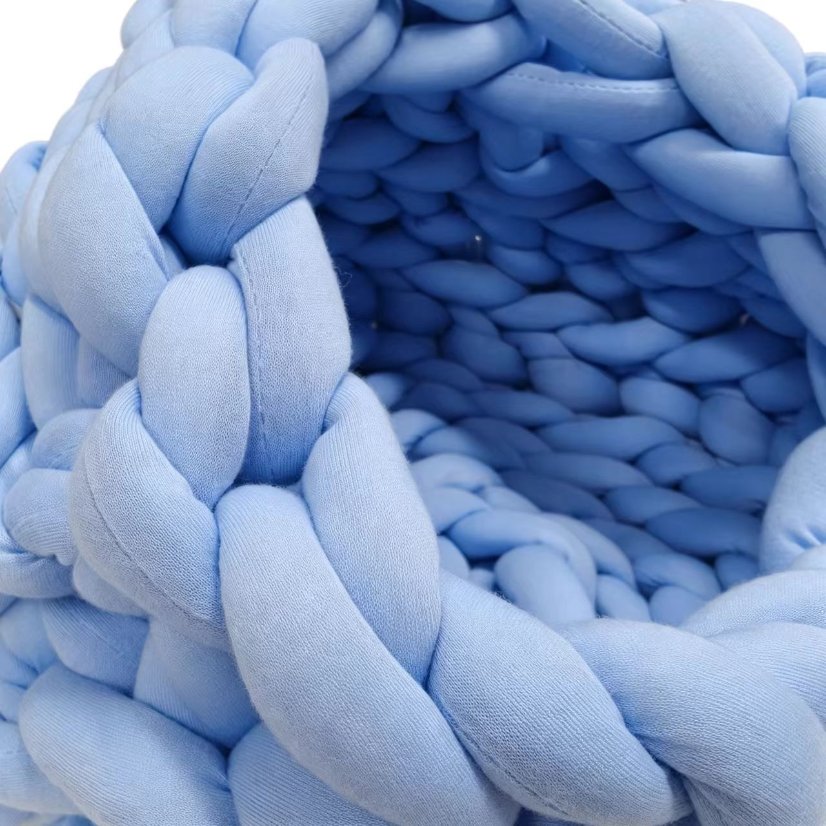
Official detail reference for the listed woven bed. It identifies the visible rim and interior form, without establishing a packing method or shape-recovery result.
Identify the offered bed and the packing question
Youxin lists a Chunky Fabric Strip Woven Pet Cat Bed in light blue. Its official references show a woven base, surrounding wall and raised rim. Those visible features help identify the product whose packed-to-unpacked presentation the buyer wants to discuss. They do not independently establish a packing specification.
A B2B buyer may need to understand how the quoted bed is presented on arrival and what the supplier expects the recipient to do before comparing it with an approved sample. Keep that question tied to the exact product version and packing proposal. Do not transfer instructions from a pillow or another pet-bed design simply because the products use similar material wording.
The reviewed catalogue text does not state the shipping pack condition or provide an unpacking sequence. Start by requesting the supplier’s offered arrangement. The enquiry can then distinguish the condition inside the pack from the product appearance used as the purchase reference.
Buying field
Requested supplier response
Offered reference
Woven-bed product version, sample identifier and quotation reference.
Packed state
Supplier confirmation of the actual arrangement proposed for this order.
Unpacking guidance
Applicable opening, positioning or other supplier-provided instructions and their scope.
Comparison reference
Identified unpacked sample and the condition represented in its images.
Observation record
What was done, when the observation was made and which areas were compared.
Approval scope
Accepted product/pack versions and matters requiring further confirmation.
Confirm the packed state before discussing the opened form
Ask the supplier whether the proposed pack holds the bed in its displayed form or another expressly identified arrangement. If the proposal involves folding, compression or another changed state, request the supplier’s description and the information supporting that particular proposal. Those are questions, not confirmed catalogue features.
Request a view or description of the actual packing sample. Identify how the bed is located, which parts are restrained and what packaging components the recipient will remove. The supplier should explain the arrangement rather than leaving the buyer to infer it from the outer package alone.
Keep any optional packing alternatives on separate quotation references. A buyer comparing carton space or a retail presentation should know which proposal is being discussed. This record does not calculate a shipping volume or prescribe a packing pressure that the supplier has not provided.
Official overall product reference. Ask the supplier which unpacked sample condition corresponds to the offered packing proposal; the photograph is not an unpacking instruction.
Request the supplier instructions for that proposal
Ask for the unpacking guidance that applies to the identified bed and pack. Clarify whether the supplier expects only removal and positioning, or provides an additional defined action. Keep the instruction source and version with the sample record so the recipient is following the offered proposal.
Do not improvise an opening or reshaping procedure from a woven appearance. If an instruction is unclear, ask the supplier to explain the relevant area and intended action. This guide supplies no force, heating method or other treatment for changing the bed’s shape.
If the supplier states a waiting condition or interval before comparison, ask what that statement covers and which evidence supports it. Record the actual scope instead of turning it into a general recovery promise. The reviewed catalogue page provides no such guaranteed interval.
Link the opened sample to a defined appearance reference
Choose an identified unpacked reference with the supplier. The catalogue photographs help locate the rim, wall and interior, while an actual order sample can establish what the parties are comparing. State whether the reference concerns an overall form, a particular area or another agreed appearance feature.
Record the sample state and viewing positions used in the comparison. An upper view may show a different part of the bed from a front-angle view. Keep those observations identifiable rather than treating every photographic difference as a product change. This is a presentation record, not a new measurement tolerance or a pet-size recommendation.
If the buyer also needs internal and external dimensions, retain the separate supplier measurement specification and its defined conditions. The opening record should point to that reference where relevant. It should not invent dimensions from the catalogue images or replace a measurement decision with a visual judgement.
Official front-angle reference for the same catalogue bed. Retain an identified supplier sample and agreed comparison conditions instead of inferring a recovery interval from appearance.
Document observations before approving the pack
Record the packing sample identifier, the guidance followed and the condition in which the opened bed was reviewed. Describe the actual rim, wall or base area being discussed. If an appearance difference is noticed, retain the supporting view and ask the supplier to respond before assigning an unprovided cause.
A difference in the opening record does not by itself establish a material problem or a particular manufacturing explanation. The supplier and buyer should decide what additional information is needed for their purchasing question. This guide makes no claim that the listed product has a defect or that a proposed pack prevents one.
Retain the agreed product and pack references with the decision. If the packing arrangement or unpacking guidance changes, identify the revised version and ask whether another sample review is required. Receiving teams need a usable reference for the accepted proposal and the questions to raise when a delivered arrangement differs.
Buyer FAQ
Does the displayed bed shape confirm vacuum packing?
No. Request the supplier’s actual packing proposal and its applicable instructions. No compressed or vacuum-packed configuration is established here.
Is an automatic shape-recovery time specified?
The reviewed page does not establish one. Ask the supplier to identify any proposed condition or interval and its supporting scope.
Can catalogue photos replace an unpacking sample?
They identify product features. A defined packed sample and opening record answer the separate question about the offered packing proposal.
Does this record define pet fit or a carrying limit?
No. Pet-size suitability, dimensions and other performance questions require their own supplier information and decision scope.
What should purchasing keep with approval?
Retain the product/pack versions, supplier guidance, sample reference, comparison conditions, observations and written decision scope.
Begin with the actual woven pet cat bed reference and request the supplier’s packing and unpacking information. See the Youxin blog for related purchasing topics.
Identify the offered packed state and supplier guidance.
Compare an opened sample with an agreed unpacked reference.
Retain observations and confirm proposed changes separately.
wholesale cat bedsB2B supplier sample record