
U-Shaped Pillow RFQs: Request the Panel Map
For a U-shaped pillow sample enquiry, ask the manufacturer for an identifiable exterior panel and seam reference for the actual offered model. A marked view can connect the supplier’s panel names and visible joins to the sample and quotation. It should describe the proposed item without turning an unlabelled product photograph into an assumed construction drawing.
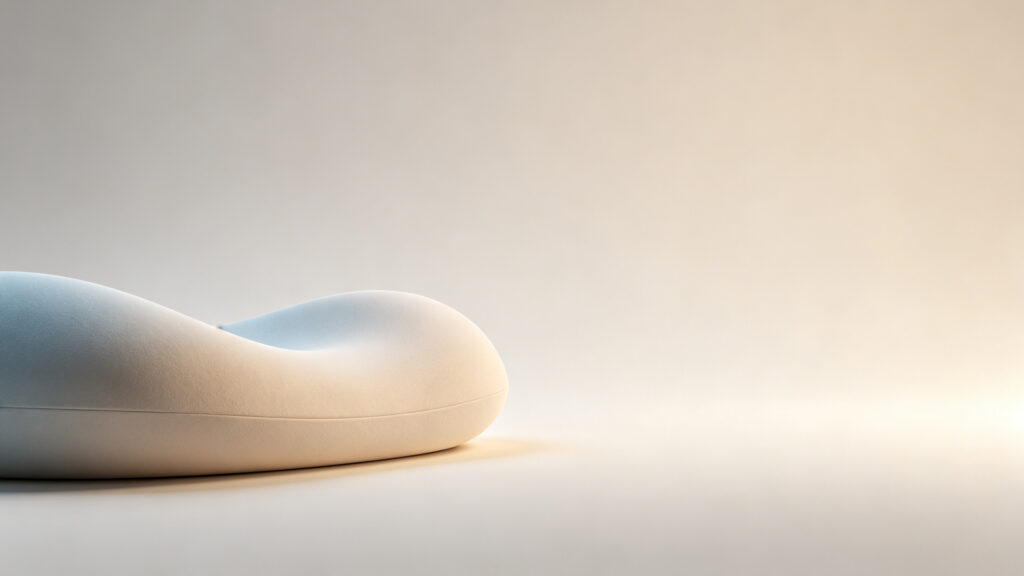
Official homepage U-shaped-pillow category illustration. Ask the supplier which offered item and panel drawing it represents; no foam, fabric, filling or construction specification is established.
Name the model before discussing its panel map
Youxin’s homepage presents U-shaped pillows and lumbar supports for business buyers. One illustration shows a pale contoured pillow from the side with a long curved seam; another shows a complete U-shaped pillow with a striped outer appearance. Use the selected appearance to ask the manufacturer which offered model it represents. Keep that model identity with the request for an exterior reference.
Where the manufacturer provides a model code or a proposal-specific description, retain that wording. Ask it to identify the product version covered by any drawing or marked image. Different homepage appearances should have separate references until their actual relationship is confirmed. A similar outline can guide the initial enquiry while leaving panel names and construction details for the manufacturer to explain.
Request the supplier’s own exterior panel names
Ask the manufacturer how it identifies the visible exterior areas of the offered pillow. Request a marked view or another available reference that associates those names with the actual sample. The useful record lets a buyer point to an area using the supplier’s terminology, rather than having each person describe the same curved surface in a different way.
Keep exterior panel identification separate from a declaration about what lies inside the product. A view of a seam does not establish filling, foam, fibre composition or the number of cut pieces. Ask the supplier what its reference actually represents. If a region is not identified in the provided document, retain that as a question instead of filling the gap with an invented panel name or count.
Separate official homepage category reference showing a U-shaped pillow with a visible cord and toggle. Their offered scope, identity and function require manufacturer confirmation.
Make view orientation understandable
Ask the manufacturer to identify the orientation used in each view. A side reference, an opening-facing reference and another exterior view can show different portions of the offered item. Retain the supplier’s description of how those views correspond. This helps a purchasing team follow a seam reference without treating the viewpoint of a homepage illustration as a complete description of the product.
If the buyer needs another area clarified, point it out in the enquiry and ask what reference the manufacturer can provide. Keep any additional view associated with the same model and version. Do not infer an unseen back panel, opening or fastening arrangement from a partial image. The reference should record the manufacturer’s actual explanation of the offered exterior, including any area that remains unconfirmed.
Buying field
Requested supplier response
Offered item
Manufacturer model or current proposal description.
Reference identity
Drawing, marked image or file identifier and version supplied.
View orientation
Supplier-defined viewpoint and its correspondence to the sample.
Exterior area names
Names or identifiers the manufacturer assigns to visible panels.
Join reference
Supplier identification of the visible seam or boundary being discussed.
Proposal association
Applicable sample and quotation version, with unresolved areas listed.
Separate visible joins from a sewing specification
Ask which visible boundary the manufacturer is describing when it marks a seam or join. Keep its reference identity with the area under discussion. A purchasing enquiry can clarify the location and naming of a join without choosing a stitch type, a thread specification or a manufacturing operation. Those details would require their own applicable manufacturer information if they become part of a later proposal.
The curved line in a product illustration should not be converted into a sewing or cutting instruction. It does not establish the complete path of a join, its internal construction or its performance. Request the manufacturer’s actual reference for the offered version and keep unanswered technical points visible. This preserves the distinction between identifying an exterior feature and specifying how a supplier must manufacture it.
Associate the marked reference with the sample
Ask the manufacturer which identified sample the panel map represents. Retain the sample reference and the file version together so the purchasing discussion can use one applicable set of names. Where the supplier proposes a different version, request confirmation of whether the previous map still describes it. Keep that reply with the revised offer rather than carrying a panel description forward automatically.
If a sample and a marked view appear to describe different areas, send a specific clarification request. Ask the manufacturer to identify the applicable reference and explain any stated difference. The buyer should not resolve a mismatch by assuming an omitted panel, a removable cover or a shared construction between the two homepage illustrations. The current manufacturer response should establish which exterior reference belongs to the actual proposal.
A different product: the apple-shaped throw pillow is separate from both U-shaped homepage references. Its stem, leaf, material declarations and dimensions do not describe a U-shaped pillow.
Keep other pillow products on their own records
The apple-shaped throw pillow shown as a separate product reference has a different appearance and its own product identity. Its stem, leaf, dimensions and material descriptions do not supply the panel map for a U-shaped pillow. Keep those references separate even when the same supplier discusses several pillow categories in one commercial conversation.
A completed U-shaped pillow enquiry should make the offered model, marked reference, view orientation and sample association easy to follow. It should also show which exterior areas still need a supplier reply. This gives a wholesale buyer a clearer visual communication record without adding unsupported material, comfort, ergonomic, health or seam-strength claims. The manufacturer’s applicable proposal remains the source of any confirmed product specification.
Buyer FAQ
What is the purpose of a panel and seam reference?
It connects the manufacturer’s exterior area names and visible joins to an identified model, sample and proposal.
Does a visible seam establish the full construction?
No. Ask the manufacturer for its applicable reference; the image alone does not establish cut-piece count, internal filling or stitch specification.
Should separate homepage pillow illustrations share one map?
Ask the supplier to identify their actual models and relationship before associating them with the same document.
What belongs with a revised map?
Keep the current file identity, manufacturer reply, applicable sample and quotation version, together with the reference it replaces.
Use the Youxin U-shaped pillow category reference, keep the separate apple-shaped throw pillow identifiable, and request the actual model’s exterior reference with your sample enquiry.
Identify the actual offered U-shaped model.
Request manufacturer panel names and view orientation.
Keep the map associated with the sample and quotation.
U shaped pillow panel seam reference mapB2B supplier sample record