
Plush Pillow RFQs: Separate Shell and Filling
For plush pillow sourcing, keep the outer fabric declaration separate from the filling declaration. Youxin’s apple pillow lists loop fleece fabric and PP cotton filling; its checkered pillow lists short plush fabric and PP cotton filling. Request a component-specific material record for the offered sample so a shared filling phrase does not erase the difference between the two outer fabrics.
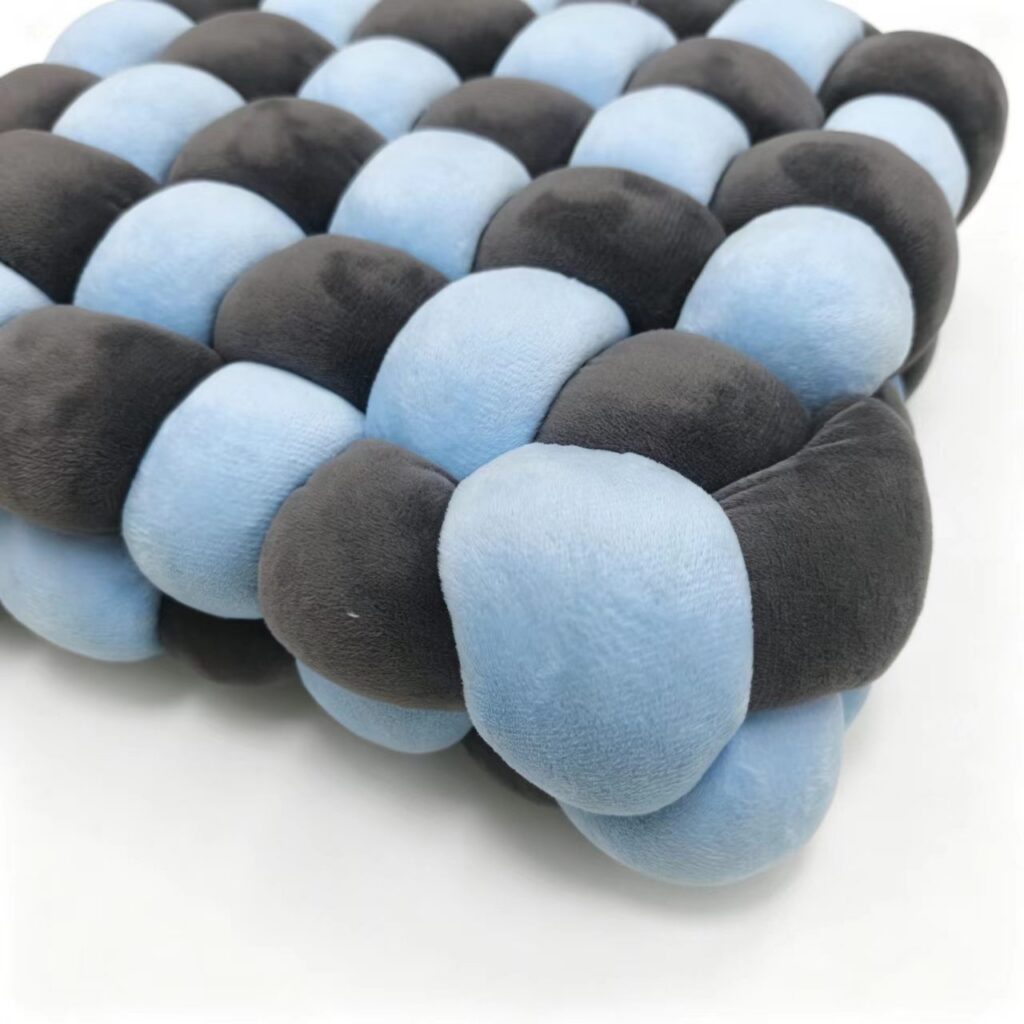
Checkered pillow close-up is an appearance reference. Its short-plush and PP cotton wording needs component-specific supplier declarations.
Keep the two supplier descriptions intact
The Red Apple-Shaped Plush Throw Pillow page names loop fleece fabric and PP cotton filling. The Checkered Woven Plush Throw Pillow page names ultra-soft short plush fabric and PP cotton filling. Retain those exact product references when asking the supplier to expand its material record.
Separate the fabric names from any promotional adjective. The procurement task is to identify the proposed outer material and filling for a named sample, not to declare a tested softness or comfort result. Keep PP cotton as the supplier’s terminology until it provides a complete material description; the wording alone is not a fibre-percentage schedule.
Create separate shell and filling fields
Use one row for the outer fabric and another for the filling on each pillow line. Ask the supplier to identify the component covered by its response, then request the generic fibre description and any declared composition it proposes. A shared material field for the complete product can conceal which part a statement actually describes.
If another component has a separate material, ask for its own record. For the apple shape, the visible stem and leaf can be identified as additional discussion positions without assuming that they use the same fabric or filling as the red body. Keep any supplier answer attached to the specific component it names.
Buying field
Requested supplier response
Apple pillow outer fabric
Supplier declaration behind the loop fleece description
Apple pillow filling
Complete supplier description behind PP cotton filling
Checkered pillow outer fabric
Supplier declaration behind the short plush description
Checkered pillow filling
Complete supplier description for the offered sample
Other visible component
Separate declaration if the supplier identifies a different material
Sample linkage
Product, component and supplier revision covered by each answer
Apple pillow catalogue appearance. The page names loop fleece and PP cotton filling; visible stem and leaf components need their own supplier scope if relevant.
Do not merge appearance and composition evidence
The apple and checkered galleries help identify different product appearances and surface textures. Use those images to mark the component under discussion, then request the supplier’s material information for that component. A close-up is useful as an appearance reference, but it is not a chemical identification or a complete composition declaration.
If the buyer needs a supporting material sheet or another supplier record, name the information requested and retain the record actually returned. Label a supplier declaration as a declaration. Where a response does not include a percentage or a component boundary, leave that field open instead of filling it from a general assumption about fleece, plush or filling terminology.
Keep the fabric-strip cat bed as a separate construction
The Chunky Fabric Strip Woven Pet Cat Bed page describes thickened elastic fabric strips. It does not repeat the two pillows’ PP cotton filling statement. Keep this product on a separate component schedule rather than copying a pillow filling declaration into the cat-bed line.
Ask the supplier to describe the proposed strip construction and its material scope if this product is included in the enquiry. The catalogue’s construction wording does not supply a fibre-percentage schedule or an independently demonstrated hand-making or elasticity result. A clear separate record is more useful than treating every soft-looking catalogue object as the same filled cushion.
Separate cat-bed fabric-strip reference. Do not assign a pillow filling declaration to this different construction.
Review a proposed material change by component
When the supplier proposes an alternative, identify the product and component being changed. Ask for the replacement material description and an identified sample reference. Keep the initial declaration in the record so the buyer can distinguish the proposed revision from the starting catalogue description.
Return the buyer’s decision against that specific change. Accepting an outer-fabric appearance should not automatically accept a different filling declaration, and accepting a filling record should not transfer approval to another pillow model. Separate decisions keep the supplier’s next response focused on the field that remains unresolved.
Send a useful component-material request
A focused enquiry can say: “For each selected apple or checkered pillow, please declare the outer fabric and filling separately. Expand the PP cotton wording into the material description you offer, identify any separately specified component and link each response to the submitted sample version. List substitutions as separate proposals.”
Before accepting the material schedule, check that product links, component names and sample references agree. Retain the supplier’s complete wording with the offer and keep unanswered fields visible. This creates a product-specific material record without inventing composition percentages, material tests, washing performance or a guarantee about comfort or suitability.
Buyer FAQ
Does PP cotton automatically identify polypropylene?
Keep it as the supplier’s wording and request the complete material declaration. Do not expand the abbreviation into an unprovided composition.
Can the cat bed inherit the pillow filling statement?
No. Its page describes a fabric-strip construction, so request its own component record.
Can the close-up replace a material sheet?
It identifies an appearance. Request the supplier information needed for the material question and label the evidence actually supplied.
Separate outer fabric and filling.
Keep each declaration with its product and component.
Record alternatives as identified sample revisions.
wholesale throw pillowsB2B supplier sample record