
Plush Product Weights: Define the Counted Unit
For a plush-product weight enquiry, identify the exact item being weighed and whether packaging or other items are included. Youxin lists 0.6 kg for its apple pillow, 0.8 kg for its checkered pillow and 0.9 kg for its fabric-strip cat bed. Keep those three catalogue entries separate and request the supplier’s weight basis before using them in a quotation or packing discussion.
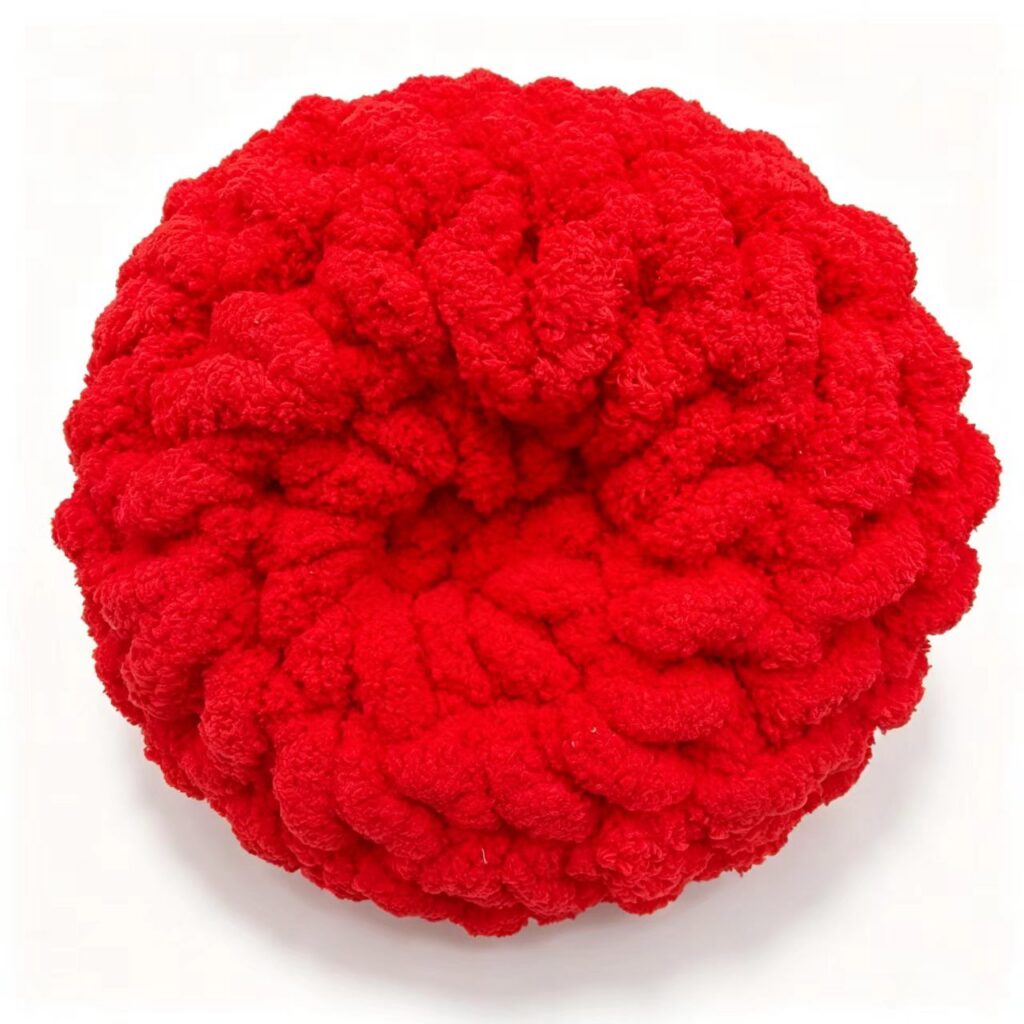
Apple pillow underside reference, distinct from its front cover view. The photograph does not verify the listed 0.6 kg weight.
Start with three product-specific reference values
The apple pillow page gives 0.6 kg, while the checkered pillow page gives 0.8 kg. The fabric-strip cat bed page separately gives 0.9 kg. Preserve the exact product correspondence instead of treating these figures as interchangeable soft-goods weights.
Put the catalogue entry in a reference column and the supplier-confirmed basis in a second column. Ask whether the value is a nominal catalogue figure, a record for an identified sample or another stated basis. This keeps the published reference distinct from any later measurement information the supplier provides.
Define the complete counted article
Ask what the supplier includes in the product being weighed. For the apple pillow, request the complete article definition including its visible body, stem and leaf configuration. For the checkered pillow, identify the offered complete cushion reference. For the cat bed, retain its own fabric-strip product identity rather than importing a pillow definition.
If the supplier proposes a different supplied configuration, record that as a separate weight line. The purpose is to compare like with like. A complete product, a cover or another component cannot share an unqualified weight field simply because the offer uses the same catalogue picture.
Buying field
Requested supplier response
Apple pillow
0.6 kg catalogue reference and defined complete-article basis
Checkered pillow
0.8 kg catalogue reference and offered product configuration
Fabric-strip cat bed
0.9 kg catalogue reference and its separate counted item
Packaging scope
Supplier statement identifying included or excluded packing
Weight record
Nominal declaration or identified sample result, with stated conditions
Offer revision
Product version and packing record to which the response applies
Separate checkered pillow reference. Its listed 0.8 kg value needs its own counted-article and packaging basis.
Ask about packaging explicitly
Request a separate statement about packaging. Ask whether the declared figure concerns the unpacked product, an individually packed unit or another supplier-defined arrangement. If the buyer needs both product and packed-unit information, provide separate fields instead of asking one value to answer both questions.
Where the supplier returns a packed-unit value, ask it to identify the packing version. Keep any outer-carton quantity, carton weight and dimensions in their own packing record. The catalogue’s three product-weight entries alone do not provide those values or establish a freight calculation.
Retain the basis of any submitted sample result
If the supplier provides an actual sample weight, ask for the sample identity, included items and stated recording conditions. Keep that information beside the result so another sample can be compared on the same basis. The buyer should be able to distinguish a nominal specification from a later supplier-reported sample result.
Do not create an acceptance tolerance from the catalogue entry. Where the buyer needs a tolerance or another acceptance rule, state that as a requirement for discussion and request the supplier’s response. Keep a proposed target, a nominal catalogue value and a recorded sample result in separate fields rather than converting their differences into an unsupported pass or fail.
Separate fabric-strip cat bed, listed at 0.9 kg. The scene does not define a measured mass, supplied pet-size range or packaging scope.
Link the weight discussion to the actual material version
The pages describe different materials and constructions: loop fleece with PP cotton filling for the apple pillow, short plush with PP cotton filling for the checkered pillow, and fabric strips for the cat bed. Retain those descriptions as identifiers of the supplier proposal without treating them as measured weight evidence.
If a supplier changes the fabric, filling or supplied configuration, ask whether the weight statement needs a new reference. Record the revised answer with the changed sample rather than keeping the original figure by default. This prevents a weight field from becoming detached from the product version the buyer is actually considering.
Close a clear supplier weight response
A concise request can say: “For each selected product, please confirm what the listed kilogram value describes. State the complete counted article, packaging inclusions or exclusions and whether the figure is nominal or tied to an identified sample. Provide separate packed-unit information if proposed and identify the relevant offer revision.”
Review the response by product line and leave unresolved packaging or sample-basis questions open. Retain the accepted supplier statement with the quotation. These catalogue weights do not establish measured mass, shipping cost, pet-size suitability or load capacity; the useful result is a defined product and packing basis that purchasing can refer to consistently.
Buyer FAQ
Are 0.6, 0.8 and 0.9 kg already verified sample weights?
They are the reviewed catalogue entries. Ask the supplier to identify whether it offers nominal values or supporting records for actual samples.
Do these values include packaging?
The reviewed weight fields do not define that scope. Request separate unpacked-product and packed-unit statements where needed.
Can the 0.9 kg cat-bed figure define its usable size?
No. Weight and usable dimensions are separate product records. Keep the cat bed’s internal-size enquiry independent.
Keep each kilogram value with its exact product.
Define the weighed article and packaging scope.
Retain nominal values and sample results as separate records.
wholesale throw pillowsB2B supplier sample record